| Videos | ? Latest |
|
? Feature | ? Sports | ? Your Videos |

Past and present of shadow play
 0 Comment(s)
 Print
Print E-mail
CNTV, November 30, 2011
E-mail
CNTV, November 30, 2011


Other Chinese items on the World Intangible Heritage List include Guqin playing, Kunqu opera, Peking opera and Acupuncture. Shadow play has a history of some two thousand years, and is still popular in northern China.
 |
|
Shadow play |
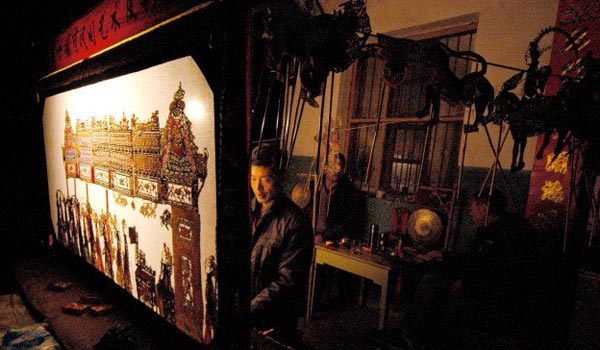
Now that Shadow Play has been added to UNESCO's list, we would like to provide some background information about the ancient art.
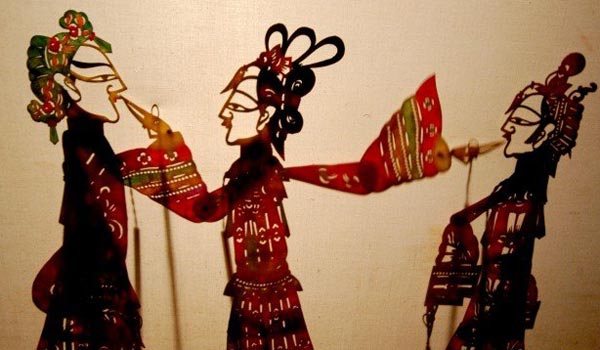
Legend has it that the art of Shadow play originated in the Han dynasty, and was invented to comfort an emperor by carving out the figure of his beloved concubine, who had died of illness, on donkey leather, and making her come back to life by moving the figure against an illuminated backdrop.
Then the art form became quite popular as early as the Song dynasty when holidays were marked by the presentation of many shadow plays. Now art troupes engaged in the art can still be found in Provinces and regions such as Shaanxi, Shanxi, Gansu and Ningxia. The moving figures, carved out from leather or paper, are manipulated by folk artists, accompanied by music and singing. They commonly tell folk stories, legends, and historical events. The shadow puppet theater is dubbed as the heralder of China's motion picture industry.
|
|
|
Shadow play |
Also coming into the nation's spotlight is Yimakan storytelling of the Hezhe people. It has just been recognized as a World Intangible Heritage in Need of Urgent Safeguarding. Hezhe people live by rivers in China's Northeast Heilongjiang Province. Without a written language, they have developed an oral art form called Yimakan to depict their daily life as well as tribal stories. The entertaining tales describe the defeat of monsters and invaders by Hezhe heroes.
Yimakan is performed by one person talking and singing without accompaniment. It has played a key role in preserving Hezhe's mother tongue, religion, beliefs, folklore and customs.
But the art is in danger of disappearing. There were more than 20 outstanding Yimakan masters in the 1980s. But now the number has diminished into 5.
Yimakan was the only application made by China to be placed on the list for World Intangible Heritage in Need of Urgent Safeguarding. Now it has joined six other Chinese items to be inscribed onto the List, which also includes the making of ancient wooden bridges and the technique of movable type printing.


