Top 10 ancient cities: China's best kept secret
- By Xu Lin
 0 Comment(s)
 Print
Print E-mail China.org.cn, April 12, 2012


Qianyang Ancient Town, Hunan (湖南古城黔陽)
|
|
|
Qianyang Ancient Town, Hunan |
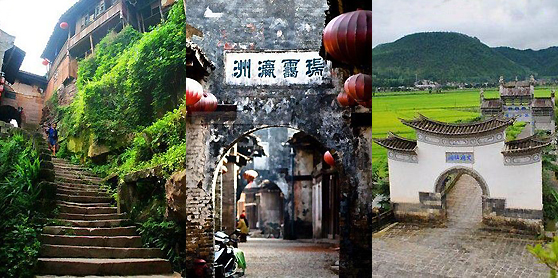
Many people know of Fenghuang, but there are still a number of other old towns in Hunan province. Qianyang is one of them. Surrounded by water on three sides, Qianyang was once a famous business town on the southern Silk Road, which was an important transportation channel before the Qin Dynasty (221-206 BC) linking China to south and west Asia.
With a history spanning 2,200 years, Qianyang Ancient Town was established in 202 BC, 1,400 years earlier than Dayan Ancient Town of Yunnan and some 900 years earlier than Fenghuang Ancient Town.
The town is a successful model planned and established based on its terrain following Feng Shui, a Chinese system of geomancy believed to use the laws of both Heaven and Earth to help one improve life. There are many alleys in the town, and each of them is connected in a T-shape, which looks like a perplexing maze. The design is a combination of traditional architecture with Chinese philosophy. Today, the town's original layout, alleys and the ancient architecture complexes of Ming and Qing dynasties are still well preserved, which is an exception in modern China.
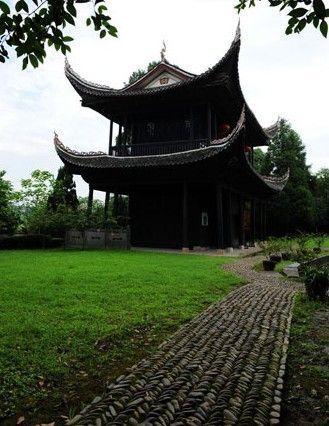
Various temples, ancestral halls, opera halls, guild halls, academies, shops, hotels, residential houses and villas can be found in the town. The tall firewalls, the bended eave corners, the wood-frame windows decorated with carved patterns and the plain counters record the town's long history. Most buildings are of one or two stories, built using either wood or brick.
For thousands of years, local residents have created a unique folk culture, including local operas, music, dances and artwork such as woodcarving handicrafts and bamboo baskets. The Mulian Opera, an integration of folk stories, sideshows and acrobatics, was recognized as the “living fossil” of Chinese opera art by the UNESCO.

Go to Forum >>0 Comment(s)