
 0 Comment(s)
 Print
Print E-mail China.org.cn, January 9, 2024


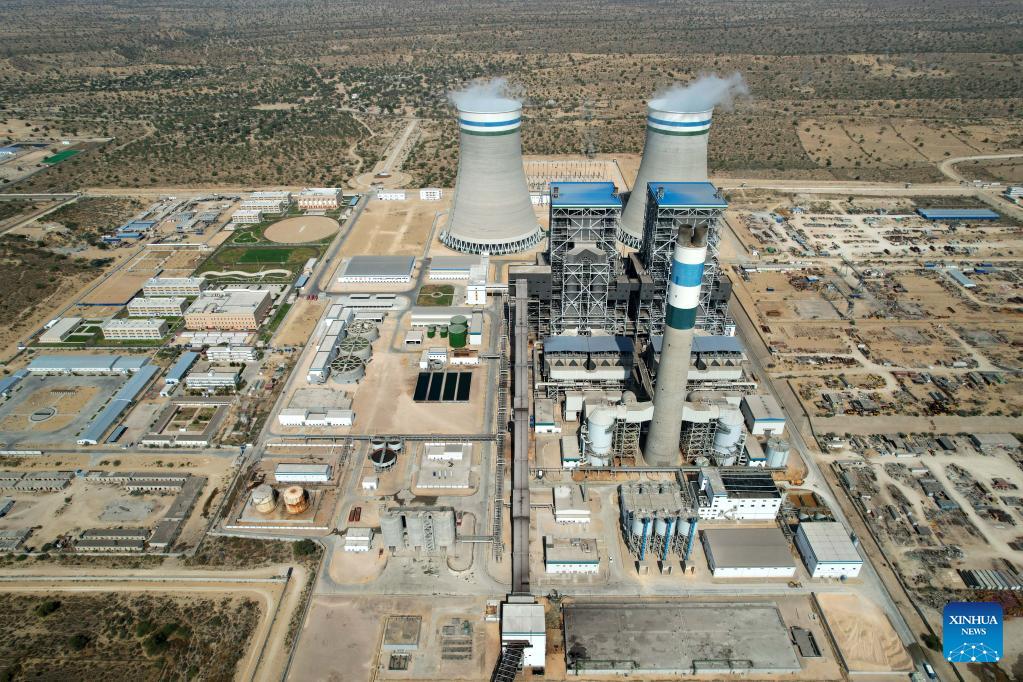
This aerial photo taken on Feb. 28, 2023 shows the view of the Thar Coal Block-I Coal Electricity Integration project in Sindh province, Pakistan. [Photo/Xinhua]
In just a few decades, China has undergone a remarkable transformation, evolving from a largely agrarian society to a global economic powerhouse. This meteoric rise has catapulted China onto the world stage as the world's second-largest economy with far-reaching implications for global politics, economics, and culture. What are the key factors that have fueled China's transformation?
For much of the late 20th century, China earned the moniker "the world's factory" due to its rapid industrialization and status as the manufacturing hub for a wide range of goods. This transformation began in the late 1970s when the country introduced a series of economic reforms that opened it up to foreign investment and trade. These reforms laid the foundation for China's economic takeoff, leading to explosive manufacturing growth.
China's enormous labor force and favorable business policies attracted multinational corporations seeking to reduce production costs. Consequently, factories across China began producing a diverse range of products, from textiles and electronics to toys and furniture, supplying global markets with "Made in China" goods. This export-led growth propelled China to become the world's second-largest economy.
China's manufacturing prowess was underpinned by its ability to scale up production rapidly. Special economic zones, such as Shenzhen, provided businesses with the infrastructure, tax incentives, and regulatory flexibility to thrive. Consequently, foreign investment poured into China, leading to the construction of modern factories equipped with state-of-the-art technology. This not only allowed China to meet global demand efficiently but also fostered the growth of a skilled workforce.
Moreover, China's position as the world's factory was further solidified by its extensive supply chain networks. The country became a critical link in global value chains, assembling products from components sourced worldwide. This integration into global manufacturing networks made China indispensable to many industries, granting the nation substantial economic influence.
In response to global challenges, China introduced the Belt and Road Initiative (BRI) in 2013. The BRI aims to forge closer economic ties with countries worldwide, enhance deep cooperation, and explore broader development prospects. The BRI, comprising the Silk Road Economic Belt and the 21st Century Maritime Silk Road, seeks to offer a new platform for international economic cooperation. It aims to contribute to the development of participating countries and enhance global economic growth.
Over the past decade, the BRI has developed into an important international cooperation platform. It has established more than 3,000 cooperation projects and galvanized nearly $1 trillion in investment, creating national landmarks and livelihood projects. Numerous transport infrastructure projects have also been launched, significantly boosting the development of BRI partners.
As China becomes more involved in global governance, it actively participates in international organizations and initiatives. The country seeks collaborative efforts in various fields including climate change, cybersecurity, and global trade, aiming for a cooperative approach to tackling global challenges. Its development demonstrates the important role it has played as a stabilizer and driving force of global economic growth. The evolution of the BRI and China's role in global governance will undoubtedly play a crucial role in shaping the future of international cooperation.
The author, an anthropologist and teacher, has lived in China since 1993. During this period, he has taught at several universities and colleges, worked for Hebei TV and China Pictorial as a foreign expert, and traveled across China. He currently resides in Beijing.
Opinion articles reflect the views of their authors, not necessarily those of China.org.cn.


