China's ambitious development blueprint
- By Robert Griffiths
 0 Comment(s)
 Print
Print E-mail China.org.cn, December 24, 2020


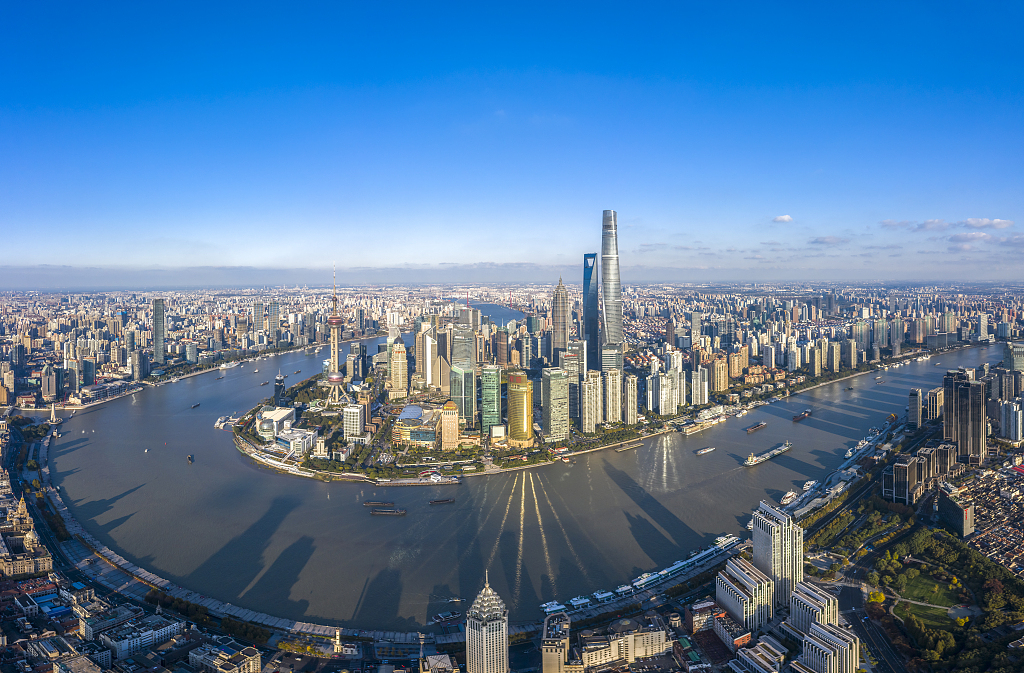
China has put forward proposals for mapping out its 14th Five-Year Plan -- a blueprint for China's development in the next five years. Priorities and objectives made in the proposals are ambitious, achievable and–in the light of current trends internationally–absolutely necessary.
Few if any of the world's major economies would have the confidence today to plan their development over the short-term, let alone as part of a longer-term perspective looking ahead to 2035 and beyond.
Most governments in the developed economies ceased any attempts at macro-economic planning decades ago – as long ago as the 1960s, in Britain's case. They bow to the sovereignty of "market forces," in keeping with the doctrine of neoliberalism.
What is produced, where and by whom are questions to be answered primarily by the giant monopoly corporations dominating most major economies. The role of the State is certainly not to guide or direct economic development in accordance with strategic, social and cultural needs and priorities.
Rather, it is to create the most favorable conditions for the maximization of corporate profit at home and abroad, in the hope that this will also produce sufficient benefits to maintain public acceptance of the economic, social and political status quo.
In Britain, and across the European Union member states, this has meant sweeping deregulation and privatization since the early 1980s.
Of course, there may also be some State intervention to influence the key decisions taken in company boardrooms, with differing types of financial incentive to assist a particular sector or region.
In extreme conditions, governments may step in decisively to rescue a particular enterprise and even – as in the 2007-8 financial crises and now in the COVID-19 pandemic – whole industries and the overall economy.
More usually, however, the prevailing view in the West is that "the market knows best" and that any attempts at macro-economic planning are doomed to fail, at great cost to the economy and to society in general.
China's experience since the late 1970s defies this orthodoxy. As a result, its economic growth rates have outstripped those of every other major country in the 21st century.
The 13th Five-Year Plan (2016-20) broadly achieved its main domestic objectives: medium-high and innovative growth in metropolitan centers and the poorer, less developed interior; the rapid spread of transport and communication links across the country; greater energy efficiency and sustainability; more consumer-led production to meet demand in a higher-wage economy; and the application of ecological principles and goals to key economic and social policies.
The development proposals for the 14th Five-Year Plan period (2021-25) unveiled at the fifth plenary session of the 19th CPC Central Committee in October prioritize self-reliance in the development of digital and cyber technology in recognition of a more uncertain international climate.
A similar emphasis is placed on expanding China's domestic market as a leading engine of growth in high-quality manufacturing production and innovation.
At the same time, it has made clear to foreign companies and trade associations that the country is not pulling up the drawbridge. Opportunities for selling to and investment in China will increase, while a policy of "dual circulation" signals the country's determination to engage fully in the international economy as well as strengthening its domestic one in order to secure continuing growth.
The proposals also suggest a new pattern of urban development, while agricultural modernization and revitalization of rural communities also assume a high priority. The commitment to green growth and to healing the rift between humanity and nature continues.
Why is China able to draw up and implement such a plan with every prospect of success?
Firstly, its ruling party and government have the will and the political vision to do so. The 14th Five-Year Plan and longer-term objectives are set from a perspective of achieving a modern, prosperous, cultured and harmonious society by the mid-century.
Secondly, China's economic system with its State ownership and control of key sectors and enterprises help ensure resources can be mobilized when and where required; the plan's targets and directives prevail over narrow or short-term interests when it comes to decision-making at company or local level.
Thirdly, the Party, government and State are building together the educational, scientific, technical, research, management and monitoring structures that are lifting macro-economic planning to a new level in comparison with the machinery of previous times.
Significantly, too, the CPC sees China's progress as part of the wider international imperative for balanced and sustainable development, mutually beneficial cooperation, and peace. The coronavirus crisis dramatically confirms that there is, indeed, a world community in which humanity shares a common future.
Robert Griffiths is a former Senior Lecturer in Political Economy and History at the University of Wales and currently the General Secretary of the Communist Party of Britain.
Opinion articles reflect the views of their authors only, not necessarily those of China.org.cn.
If you would like to contribute, please contact us at opinion@china.org.cn.


