Cultural dimension of growth
 0
0 


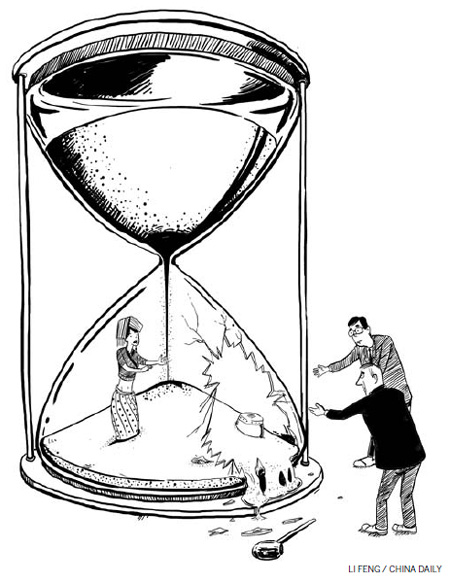
At the recent United Nations Summit on Millennium Development Goals (MDGs), countries reiterated their commitment to achieve the eight ambitious development goals by 2015.
The MDGs are eight international development goals that all the 192 UN member states and at least 23 international organizations have agreed to achieve by 2015. The goals include eradicating extreme poverty and hunger, achieving universal primary education, promoting gender equality and empowering women, reducing child mortality rate, improving maternal health, combating HIV/AIDS, malaria, and other diseases, ensuring environmental sustainability, and developing a global partnership for development.
Given China's astonishing economic and social progress in the past three decades, it is not surprising to see it has already met or is on track to meet most of its MDGs. China is committed to inclusive growth through development strategies that seek to bridge the divide between its eastern and western regions, urban and rural areas, and the rich and the poor.
There is growing awareness in China that the gap between ethnic and other social groups is still wide. Though ethnic groups constitute only 8 percent of China's population, they make up 51.2 percent of the nation's poor. Moreover, members of ethnic groups have, on average, lower levels of education and poorer health. Plus, globalization and rapid economic development pose a threat to their cultural identities.
The UN in China initiated a three-year joint program between the UN and the Chinese government in late 2008 on culture and development in Yunnan, Guizhou and Qinghai provinces and the Tibet autonomous region, which are home to a majority of ethnic groups and are less developed than the eastern coastal areas. The program was launched in collaboration with the State Ethnic Affairs Commission (SEAC) and about 100 governmental and non-governmental partners.
The program aims to improve the participation of ethnic groups in cultural, socio-economic and political life through improved public policies and services. It seeks to empower ethnic communities to protect and value their cultural resources while benefiting from culture-based economic development. The program has received $6 million in funding support from the Spanish government and an additional $1 million in kind from the Chinese government.


