Time to get serious about income reform
 0
0 


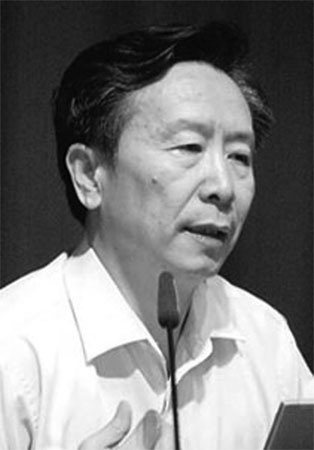
Editor's Note: The recently released CPC Central Committee's Proposal for Formulating the 12th Five-Year Plan for China's Economic and Social Development (2011-15) includes a commitment to prioritize income growth and improve the social welfare system. This contrasts with earlier policies that almost entirely emphasized GDP and productivity growth alone. But how can plans be translated into reality? What should the government do to narrow an already wide income gap? People's Daily Online (PO) interviewed Su Hainan (Su), deputy director of the China Association for Labor Studies, on these issues.
 |
|
Su Hainan |
PO: The proposal explicitly avows the commitment to increase household income without sharpening income disparity. What is the antecedent circumstance?
Su: The existing income disparity, which has rapidly worsened in recent years, is an immediate prompt to reform. The disparity exists mainly in the primary distribution of household income and returns from labor, and was an inexorable consequence of the mass privatization and marketization of the past decade.
This is a very central issue that the public is deeply concerned with. According to many polls and online surveys, income disparity constantly ranks among the top three public worries.
We have arrived at a juncture when profound social changes are now achievable. The lasting economic boom has financially enabled China to mitigate income inequality and resolve other social problems.
Given the political commitment to "build a well-off society in an all-around way" by 2010 and other commitments, it is time to realize what politicians once envisioned, and to translate the ambition into workable policy.
PO: On the policy level, what can the government do to close the income gap?
Su: The Proposal mentions the necessity to adjust income distribution. This is a herculean task, and a difficult mission that pertains to multifarious social problems.
But generally, it is still obvious all levels of government have to achieve the following tasks.
Local governments need to quantitatively set their objectives in accordance with the commitment made by the central government. Clearly this is a mandatory requirement rather than optional suggestion.
The central government needs to expedite the process of policy drafting. At present there are many different ministerial drafts ongoing, which we believe could have been done more quickly. The National Development and Reform Commission is now working on a detailed distributional reform proposal.
The Ministry of Finance needs to review the plans for tax reform, including the reforms on income tax that directly affect the distribution of wealth. Many concurrent reforms are coming from different ministerial administrations. There must be some way to enhance their efficiency as a whole.
Meanwhile, the reform must also readjust the triangular allocation of resources among the public sector, private sector, and individuals. The principle is about transferring the resources from the government and firms to citizens, either by tax abatements or necessary reform in primary distribution.


