How to clean up an oil spill
 0 Comment(s)
 Print
Print E-mail
University of Delaware, August 3, 2011
E-mail
University of Delaware, August 3, 2011


No two oil spills are the same because of the variation in oil types, locations, and weather conditions involved. However, broadly speaking, there are four main methods of response.
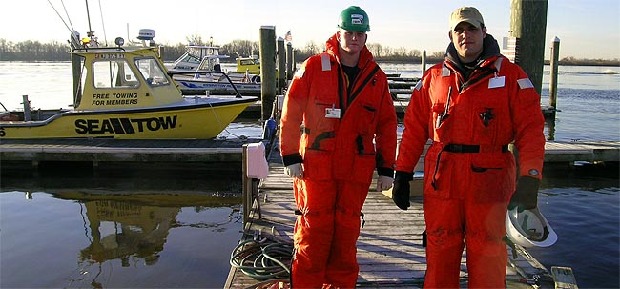
(1) Leave the oil alone so that it breaks down by natural means. If there is no possibility of the oil polluting coastal regions or marine industries, the best method is to leave it to disperse by natural means. A combination of wind, sun, current, and wave action will rapidly disperse and evaporate most oils. Light oils will disperse more quickly than heavy oils.
(2) Contain the spill with booms and collect it from the water surface using skimmer equipment. Spilt oil floats on water and initially forms a slick that is a few millimeters thick. Boats, vacuum machines, and oil-absorbent plastic ropes that skim spilled oil from the water's surface after booms have corralled it. The skimmer collects oil into a container so it can be removed.
(3) Use dispersants to break up the oil and speed its natural biodegradation. Dispersants act by reducing the surface tension that stops oil and water from mixing. Small droplets of oil are then formed, which helps promote rapid dilution of the oil by water movements. The formation of droplets also increases the oil surface area, thus increasing the exposure to natural evaporation and bacterial action.
Dispersants are most effective when used within an hour or two of the initial spill. However, they are not appropriate for all oils and all locations. Successful dispersion of oil through the water column can affect marine organisms like deep-water corals and sea grass. It can also cause oil to be temporarily accumulated by subtidal seafood. Decisions on whether or not to use dispersants to combat an oil spill must be made in each individual case. The decision will take into account the time since the spill, the weather conditions, the particular environment involved, and the type of oil that has been spilt.
(4) Introduce biological agents to the spill to hasten biodegradation. Most of the components of oil washed up along a shoreline can be broken down by bacteria and other microorganisms into harmless substances such as fatty acids and carbon dioxide. This action is called biodegradation.
The natural process can be speeded up by the addition of fertilizing nutrients like nitrogen and phosphorous, which stimulate growth of the microorganisms concerned. However the effectiveness of this technique depends on factors such as whether the ground treated has sand or pebbles and whether the fertilizer is water soluble or applied in pellet or liquid form.


