 The Tajik ethnic group has a population of 33,000, the majority of which live in the Taxkorgan Tajik Autonomous County, east of the Pamirs Plateau. The Tajiks are famed for their unique lifestyle, earthy folk customs, and their honest, sincere, and hospitable nature.
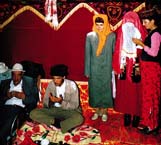
The photo shows that an imam witnesses a wedding and prays for the couple.
The Taxkorgan Tajik Autonomous County borders on Tadzhikistan in the northwest, faces Afghanistan in the southwest, and is adjacent to Pakistan in the south. The area is mainly inhabited by ethnic minorities who live a half-nomadic, half-agricultural life. Among the county's inhabitants, the Tajiks have developed distinctive folk customs that have been influenced by the strong characteristics of the plateau; and of these customs, their wedding ceremony is particularly noteworthy.
The Tajiks highly value marriage; and their wedding ceremonies are usually grand occasions. The month of October, a time when the weather is pleasant and cattle and sheep become stout and strong, is the high season for weddings, which usually last three days.
On the first day of the wedding, the bride and the groom stay at their own homes, entertaining guests with a banquet. In addition to clothes and ornaments, congratulatory gifts generally include four to six nangs (pancake of wheat or corn flour). The couple's close relatives also present them with a live sheep. While receiving the gifts, the mothers of the bride and groom as well as their eldest sister-in-law spread flour on the gifts to bless them. At noon, the bride and groom, separately, take a bath and then change into their wedding outfits. To complete the first part of the wedding ceremony, a prestigious imam is invited to pray loudly for the couple and to kill a sheep with a single stab in order to drive away any evil that might be present. Once the ritual has ended, the bride is not allowed to go out of her home until the groom meets her the next day.
On the second day, the groom, accompanied by a young, married man and a group of unmarried friends playing musical instruments and singing wedding songs, rides a horse to the bride's home. When the groom arrives, the bride's friends offer him two bowls of butter-flavored milk to show their acceptance of his affection and faith. The bride's grandmother then blesses her future grandson-in-law by spreading flour on his shoulders. After which, the groom presents gifts to the bride as well as her relatives and friends who have gathered at the entrance to meet and entertain him and his fellow friends with delicious food. The last thing left to do that day is to take part in a variety of amusements. In addition to sport activities, like horse racing and horsemanship, women beat hand drums and men blow eagle flutes unique to the Tajik group. As the melodious music fades in, all the guests, men and women, old and young, start the eagle dance.
Before leaving her parent's home on the third day, the bride drinks a bowl of saline water prepared by her family, who hopes not to be forgotten by her. Traditionally, the couple would ride the same horse to the groom's home. Today, though, an automobile is used instead of a horse. A red carpet is laid out in front of the bridal chamber; and as the newlyweds step onto the carpet, they receive blessings from the groom's relatives who spread flour on their shoulders. Once they enter the bridal chamber, the couple starts a new life together.
The Tajiks attach great importance to weddings; and whenever a wedding message arrives, people take congratulatory gifts and ride their horses to the wedding, no matter how far the distance. They believe that a grand wedding ceremony will bring everlasting happiness to the newlyweds.
(China Pictorial February 10, 2003)
|