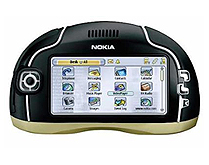
TV mobile phones, dubbed as the "Fifth Media," have not yet seen an opportunity for its rapid growth in China. Experts say it will take some time for TV mobile phones to enter the people's lives in the country.
A report released by IMS Research says that by 2010 there will be 120 million subscribers viewing TV programs on mobile phones and TV mobile phones would become the "Fifth Media", besides newspaper, radio, television, and computer network (or web). Analysts say Asian subscribers more readily accept new mobile phones than other users.
In face of the lucrative market, Chinese companies have aroused to start this business. Before the May Day holiday in 2004, China Unicom launched a service to provide TV programs for mobile phone subscribers. Not long after that, China Mobile started a TV mobile phone service through GPRS network.
Despite a promising future, TV mobile phones are still at its early stage of development in China due to limited broadband capacity, limited choice of handsets, much higher price and lack of standards and policies.
China's TV programs are currently transmitted to mobile phones through 2.5 or 2.75 generation networks, which are not sophisticated enough to convey high-quality TV signals.
The download speed of GPRS is only 25 kbps and that of China Unicom's CDMA1X is 60-70 kbps, which is far from the 128 kbps as required for high-quality TV program broadcast.
High price has also bottlenecked China's TV mobile phones. China Unicom subscribers have to pay at least 200 yuan (US$24) for one hour's TV program on mobile phones.
Reports say some operators are in negotiation with China Mobile on providing TV service for mobile phone subscribers with a fixed monthly fee of around 100 yuan (US$12), aiming to cut the price of watching TV on mobile phones.
At present, handsets that can receive TV signals sell at approximately 5,000 yuan (some US$600). This makes them unpopular when most other handsets cost 1,000-2,000 yuan (US$120-240).
The short lifespan of their batteries also limits the use of TV mobile phones. Handset batteries can last three days to a week for general use, but just one hour for watching TV.
Industry insiders worry that subscribers may not accept the new function and service easily. Just like visual telephones, Europe and Asia have offered this service, but few people use it, said an analyst with Gartner.
China has not worked out unified, concerned policies and the operation of TV mobile phone service is proceeding under various standards.
Experts hold that companies rushed into this immature sphere partially for the third generation mobile technology (3G). Mobile phone TV broadcast has been deemed pivot product of 3G and China Mobile and China Unicom launched the service to be early players in the market.
As voice business is getting increasingly competitive, visual service could bring new profits for telecom operators.
(Xinhua News Agency February 19, 2005)