China is a country of many ethnic groups and many political parties. Before the state adopts important measures or makes decisions on major issues with a bearing on the national economy and the people's livelihood, the Communist Party of China (CPC), as the party in power, consults with representatives of all ethnic groups, political parties and democrats without party affiliation, and all other social sectors. This system of multi-party cooperation and political consultation led by the CPC is a basic political system in China.
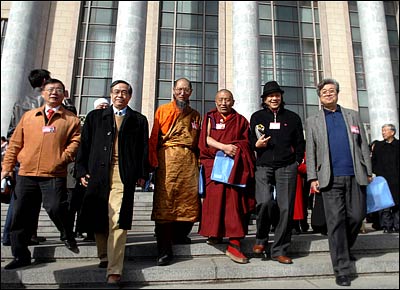 |
Multi-party cooperation and political consultation take two principal forms: (1) The Chinese People's Political Consultative Conference (CPPCC); (2) consultative conferences and forums participated in by people from democratic parties and democrats without party affiliation at the invitation of the CPC Central Committee and local Party committees. The CPPCC is neither a state organ nor an ordinary civic organization. It is a widely representative, patriotic united front organization of the Chinese people. It has a National Committee and provincial (autonomous regional and municipal) and county (city) level local committees. The CPPCC National Committee consists of representatives of the CPC, democratic parties, democrats without party affiliation, people's organizations, ethnic minorities and other social strata, compatriots from Taiwan, Hong Kong and Macao, returned overseas Chinese, and specially invited individuals. The CPPCC is elected for a term of five years, its current Chairman being Jia Qinglin. In addition to attending a plenary session of the CPPCC once a year, CPPCC National Committee members are invited to attend the NPC and fully air their views as non-voting delegates, so as to exercise the functions of political consultation, democratic supervision and participation in the deliberation and administration of state affairs. When the committee is not in session, special activities for the committee members are organized, including inspection tours of various localities. Consultative discussions are held on significant issues relating to major state policies, the people's livelihood and united front work. Democratic supervision is exercised over the work of state organs and the fulfillment of the Constitution and laws through the offering of opinions, proposals and criticisms. Once a year, leaders of the CPC Central Committee invite leaders of the democratic parties and representatives of democrats without party affiliation to consultation meetings; forums are held every other month. The former focuses on major state policies, the latter on exchange of information, receiving policy proposals and discussing special issues.

