| Home / Environment / Photo News | Tools: Save | Print | E-mail | Most Read |
| Five Discoveries of Hoh Xil 2006 Scientific Expedition |
| Adjust font size: |
A 40-day scientific expedition to Hoh Xil organized by the Chinese Academy of Sciences (CAS) has finished and the expedition team returned to Golmud in Qinghai Province on November 18. Deputy Secretary General of the expedition’s instruction committee Chen Yonghong and director of the rear coverage group Zhu Jiang revealed five major discoveries found during the expedition to People’s Daily.
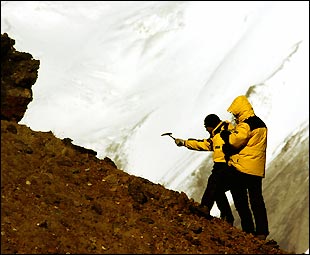
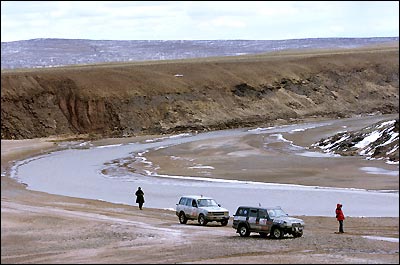
On the route of this year’s expedition were Xidatan, Hoh Sai Lake, Zonag Lake, Buka Daban Mountain Peak, Moon Lake, Lianhu Lake, and Maqu Town (under the jurisdiction of Amdo County of Tibet Autonomous Region). The first discovery: The region surrounding the Zonag Lake is still the best place for many female Tibetan antelopes to give birth. “Although the ecological environment of Zonag Lake is not as good as before, the magnificent sight still appears that lots of antelopes migrate there for lambing because of genetic positive effects of the animal,” said Zhu Jiang. The second discovery: The expedition team found an intriguing phenomenon in Hoh Xil that some millions-year-old glaciers are shrinking while others are advancing. The phenomenon even occurs within the same glacier with one slope shrinking and the other advancing. The finding has significance in studying the shape and alteration of glaciers. The third discovery: There was once a river course linking the Moon Lake and Lianhu Lake. The expedition team found this time that the river course had become much wider. It means the two lakes may one day merge. The fourth discovery: The collaboration between highland animals was a big surprise to the team members. They saw a kind of mouse-hare help a local bird dig a hole in a tree-trunk, following the two shared the nest with the bird guarding the hole against intruders dangerous to the mouse-hare. The fifth discovery: Wild creatures took “revenge” on human beings for their ecological damage. In Maqu Town of Amdo County in Tibet, over-herding has destroyed the local biological food chain, leading to less prey in the nature for brown bears. The hungry bears have had to resort to snatching cows and sheep raised by local herdsmen. Sometimes the herdsmen will also get attacked by the big animal. A local household may be attacked by the bears as many as ten times in a year.
(China.org.cn by Zhang Tingting, November 25, 2006) |

| Tools: Save | Print | E-mail | Most Read |
 |
| Related Stories |
|
||||
