| Home / English Column / Environment / Environment -- What's New | Tools: Save | Print | E-mail | Most Read |
| Dafeng Named Sweet Home for David's Deer |
| Adjust font size: |
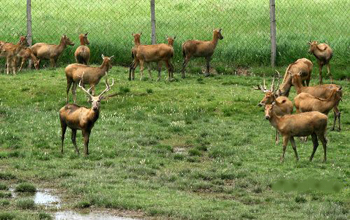
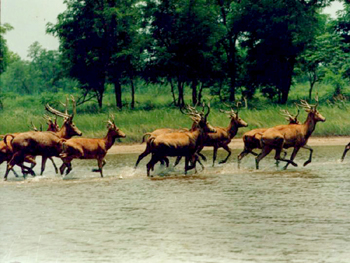
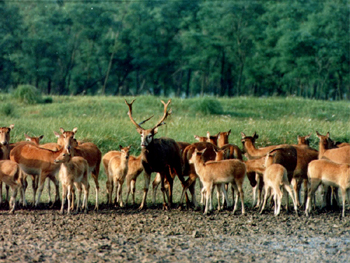
Dafeng David's Deer Nature Reserve in Jiangsu Province, where more than 1,000 milu or Pere David's deer live, was named "home for milu in China over the weekend for its excellent job in milu protection. The number of milu at the reserve accounts for 32 percent of the world's total, according to China Wildlife Conservation Association (CWCA). The reserve is the largest of its kind all over the world. China is now the largest habitat of milu, with a deer population of over 2,000 or two-thirds of its total in the world, Zhao Shengli, CWCA's undersecretary general said. Dafeng national nature reserve covers an area of 78,000 hectares and was established in 1986 on the eastern coastline of Jiangsu Province. Today, the number of the species living in wild has grown to 62 since 1998 when the reserve set free only eight of the animals into the wild, Ding Yuhua, deputy director of the reserve, said. In 2003, the animal species was removed from the red list of endangered animals published by the World Conservation Union. However, David's deer is still under the state top-level protection in China. The species was named after Pere David, a French Catholic priest and naturalist who first recorded the existence of the deer in China back in 1865. Pere David's deer were first mentioned in Chinese books more than 2,000 years ago. The wetland deer species bears the odd nickname of "sibuxiang", or "none of the four alike" for its unique features in appearance -- a horse's face, a donkey's tail, cow-like hooves and a stag's antlers. The milu was once an indigenous species living in the central swamps of China. About 1,000 years ago, due partly to human encroachment and natural disasters, the species became extinct in its original habitat. In 1900, due to wars, floods and famine, the milu became extinct in China. It was not until 1985 that the milu finally got a chance to return to China, its homeland, after decades abroad. Today, most of them are living in Beijing, Jiangsu and Hubei provinces.
(China Daily, China.org.cn June 20, 2006) |

| Tools: Save | Print | E-mail | Most Read |
 |
| Related Stories |
|
