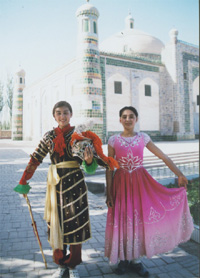
The Xinjiang Uygur Autonomous Region, a multi-ethnic and multi-religious region since ancient times, has been an inalienable part of China for more than 2,000 years, says a white paper issued by the Information Office of the State Council yesterday.
Xinjiang, with an area accounting for one-sixth of China's total territory, has 47 ethnic groups with a population totaling 19.25 million.
The white paper says that in ancient times many tribes and ethnic groups lived in Xinjiang, which is situated in the border area of northwest China and the hinterland of the Eurasian Continent.
The ethnic origins of the residents of Xinjiang began to be clearly recorded in the Han Dynasty (206 BC-AD 220), with the main origins of ethnic groups including the Sai (Sak), Rouzhi (or Yueh-chih), Wusun (Usun), Qiang, Xiongnu (Hun) in addition to Han, who, the paper says, were one of the earliest peoples to settle there.
In 101 BC, the Han Empire began to station garrison troops to guard the borders while opening up wasteland for cultivation of farm crops in Luntai (Bugur), Quli and some other places. Later, it sent troops to all the other parts of Xinjiang for the same purpose.
The period of the Wei, Jin and Southern and Northern dynasties (220-589) witnessed frequent migration ethnic groups across the land into China, including the entry into Xinjiang by many ethnic groups, such as the Rouran (Jorjan), Gaoche, Yeda and Tuyuhun.
In the dynasties of Sui (581-618) and Tang (618-907), the ancient Turk and Tubo peoples exerted big influences on the course of Xinjiang's history.
The Turks were ancient nomads active on the northwestern and northern grasslands of China from the Sixth to the Eighth centuries.
The Tubo were the ancestors of the Tibetans, rising to notice on the Qinghai-Tibet Plateau in the sixth century.
In 840, large numbers of Uighurs (an ancient name for modern Uygurs) entered Xinjiang. The Uighur, originally called Ouigour, sprang from the ancient tribe Teli. In 744, they founded a khanate, which collapsed in 840.
From the 1760s on, the government of the Qing Dynasty (1644-1911) sent Manchu, Xibe and Suolun (Daur) troops from northeast China to Xinjiang to strengthen frontier defense. This added to the ethnic mix there. Afterwards, Russians and Tatars migrated into Xinjiang.
The white paper says by the end of the 19th century, Xinjiang had 13 ethnic groups, with the Uygurs forming the majority, as they do today.
(China Daily May 27, 2003)