Credibility key to mainstream media in cyberspace
- By Chen Boyuan
 0 Comment(s)
 Print
Print E-mail China.org.cn, April 19, 2017


|
|
|
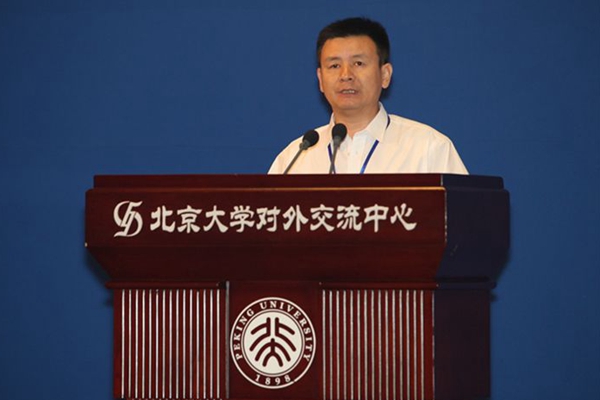
Prof. Xie Xinzhou, dean of the School of New Media and Internet Communication at Peking University [Photo/pku.edu.cn] |
In the current age of rapid cyberspace development, when everyone becomes a potential publisher of what is called "self-media," the mainstream media inevitably feel a threat to their existence.
Acknowledging the apparent growth of self-media, Prof. Xie Xinzhou from the prestigious Peking University, however, asserts that mainstream media outlets can still retain vitality as long as they stay credible.
"High credibility with the public is the largest advantage of mainstream media," said Xie, dean of the School of New Media and Internet Communication at Peking University, and an expert on cyberspace studies and communications.
His remark came one year after President Xi Jinping presided over the Symposium on Cyberspace Security and Informatization on April 19, 2016. There, President Xi, who is also head of the Central Internet Security and Informatization Leading Group, called for enhanced development of the Internet and its harnessing for the benefit of the country and all its people.
Xi told the symposium that "a clean and healthy cyberspace is in the interests of the people, while a foul and unhealthy one benefits no one." To ensure high quality content with positive, mainstream energy, improvement must be made in cyberspace management, Xi said.
The Chinese president's requirement for high-quality online content amounts to a timely encouragement for the mainstream media, which is more likely to adhere to the bottom line of truth and credibility.
While ensuring credibility, however, mainstream media should also evolve to cope with the changes rapidly taking place in the internet age.
"In other words, mainstream doesn't mean being obsolete. Mainstream media certainly need to develop their online services, and consider how to make their voice heard by more people in a faster way through cyberspace," said Xie.
He went over a few successful examples of China's national media outlets gaining popularity on mobile apps and Chinese homegrown social networks including Weibo and WeChat.
While celebrating diversified, new genres in information presentation, he cautioned that media integration "means more than a simple migration to the internet," as has been the case with some media outlets.


