Newspapers cry foul over Beijing subway ban
 0
0 


 |
|
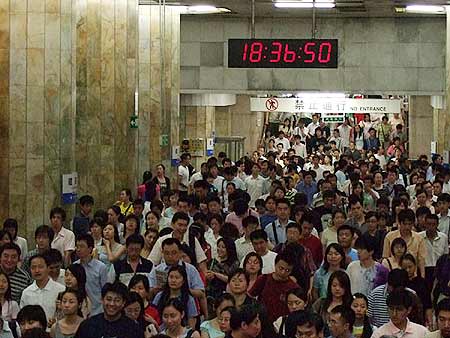
More than 5 million people use the Beijing subway every day. [China.org.cn] |
The Beijing Subway Company and the transport police have banned nearly all newspaper and magazine vendors from the city's subway lines, effective January 8. The only exception is the Beijing Star Daily, a freesheet featuring entertainment news. Passengers are complaining about inconvenience and a scholar criticized the move as "a suspect monopoly."
On January 4, public transit section of Beijing Public Security Bureau ordered the Beijing Subway Operation Company to stop selling all newspapers and magazines in stations – with the sole exception of the Beijing Star Daily which it said was "the only qualified subway newspaper admitted by Publicity Department of the CPC Beijing Municipal Committee."
A spokesperson for the Beijing Subway Company confirmed that about 70 vendors have been cleared out of subway stations so far.
The Beijing transport police say selling newspapers in crowded subway stations and walkways is a potential hazard.
More than 5 million people use the Beijing subway every day. They buy around 100,000 newspapers a day between them and sales have been increasing year on year.
After the order was enforced, newspaper offices began to receive calls from readers complaining they were not able to buy their favorite newspaper. Jin Feng, publisher of Beijing Times, said on Sunday that the prohibition was harming the media industry and that he would take the matter up with the Beijing government.
"The subway is an important sales location in most countries, especially in developed countries. It's not fair to allow one newspaper in and throw out all the others. Vendors occupy less than one square meter and move around. They don't cause obstructions. The reason being given for the ban is just an excuse for unfair competition."
Zhou Xiaozheng, a sociology professor at Renmin University agrees with Jin. "As long as properly managed, selling newspapers is perfectly legal. This order is an abuse of power and a suspect monopoly."
The Beijing Subway Operation Company founded the Golden Ant Culture Development Center in 2004 to manage sales of newspapers and magazines in stations. Deputy manager Mr. Liu said its 200 employees were facing redundancy.
.


