On November 9, the Chinese government announced that it will spent 4 trillion yuan (about US$570 billion) over the next two years to finance programs in ten major areas in an effort to boost domestic demand and spur economic growth. How will the 4 trillion yuan be spent? Will this stimulus package work as hoped? China.org.cn invited Ma Xiaohe, deputy director of the Academy of Macroeconomic Research under the National Development and Reform Commission, to answer these questions.
|
|
|
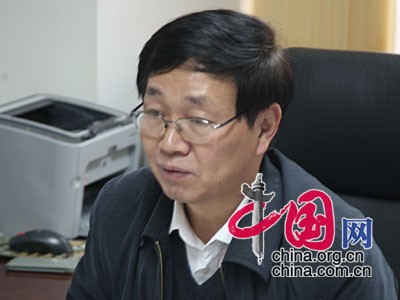
Ma Xiaohe, deputy director of the Academy of Macroeconomic Research under the National Development and Reform Commission, talks in an interview with China.org.cn on Nov. 26, 2008.
|
China.org.cn:
In early November, the State Council announced the 4 trillion yuan economic stimulus package. In normal circumstances the government would put forward its macroeconomic control policies at the Central Economic Conference held in December every year. Why did the government choose to announce the policy earlier?
Ma Xiaohe:
I think there are two reasons for this. Firstly, the Chinese economy is facing a very different situation this year. The current global financial crisis is having a bigger-than-expected impact on China and China was affected more in August and September than the first half of 2008. Therefore it would be too late if the government waited until the Central Economic Conference.
Secondly, the Chinese economy – in particular in the export industry, labor-intensive industries and capital-intensive industries – has seen a slowdown in growth. In this situation, the government needs to adjust its policy and it needs to do it early.
In an effort to cope better with global economic trend and maintain stable domestic economic growth, the government chose to shift its policy in November. And I think it was a necessary and timely move.
China.org.cn:
During the 1997 Asian financial crisis, the government also implemented a policy of stimulus. What's the difference between the 1997 plan and the current one?
Ma Xiaohe:
Back then, the government issued treasury bonds to raise funds for economic investment. In total, 3 trillion yuan was pumped into the Chinese economy. Most of the money was spent on infrastructure projects, including airports, roads and the power network. However, the ten major steps specified in the current 4 trillion yuan stimulus package are quite different. The first one is a welfare housing project, which includes rural housing reconstruction and building low-rent urban housing.
The second one is rural infrastructure construction. During the Asian financial crisis, rural infrastructure construction was not a key project – we focused more on larger projects such as highway construction. But this time, the government will step up efforts to promote the use of methane and to ensure drinking water safety for over 230 million rural residents. This part of the plan also includes more projects that are vital to people's livelihood – rural power grid construction, North-South water diversion projects, reinforcement of risky reservoirs, and water conservation projects.
The third step is the construction of railways, roads and airports. China built a number of these ten years ago, but this time we will try to improve the transport network. The government will invest in health and education projects such as improving the grassroots medical system and rural school construction. Back in 1997, we didn't have these kinds of projects. Environment projects were included on both occasions, but greater efforts will be made to address rural pollution, rubbish disposal and water pollution.