Auctions boost domestic demand for Chinese relics
 0 Comments


|
|
|
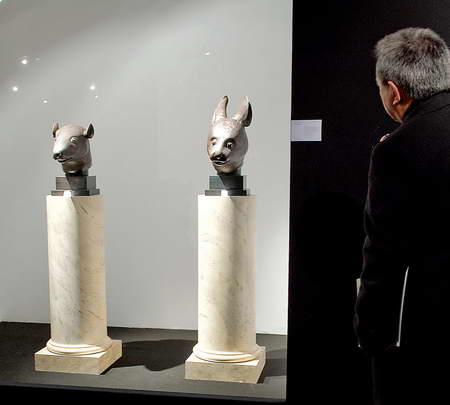
The Chinese bronze sculptures of rat and rabbit heads auctioned at Christie's this spring. [CFP] |
This year's spring and autumn antiques auctions, no matter whether they were held at home or abroad, witnessed fierce bidding wars over Chinese cultural relics, with several pieces sold for millions of dollars, and many native Chinese collectors making their bids.
In recognition of this trend, the International Cultural Relics and Art Auction Forum was held over the weekend. Topics in the two-day meeting included how to regulate the market and tactics for returning stolen cultural treasures to China.
Organized by the non-profit China Association of Auctioneers, the forum attracted government o cials, presidents of domestic and international auction houses, experts on cultural relics and professional collectors.
"Compared with previous years when Chinese cultural relics were always pursued fi ercely by foreign buyers, more and more Chinese native collectors are now buying these pieces not only at domestic auctions, but also at international ones, which is quite inspiring," said Zhang Xinjian, vice director of the Cultural Market Department of the Ministry of Culture.
"Their avid purchases of these pieces at international auctions is helpful because the art objects are returning home after being kept overseas for a long time, but also because it boosts the awareness of ordinary Chinese people to the importance of preserving cultural relics," he explained.
Zhang said the government encourages wealthy collectors to buy cultural relics from overseas, because Chinese people have more money today than in past decades when cultural relics were sold overseas at very low prices.
Tan Ping, director of the Museum and Cultural Relics Department of the State Administration of Cultural Heritage, said the development of a domestic antiques market is of great signifi cance because it reduces the selling of China's cultural heritage overseas. A sound market also helps prevent the spread of fake Ming vases and other bogus antiques.
"Compared with 16 years ago when the cultural relics market was controlled by the government, today we have made great progress in this fi eld, with professional auction houses and mature collectors," said Tan.
He explained that in 1958 all auction houses were closed by the government, so there was no open trade market for cultural relics. It wasn't until 1994 that the government gave permission for six auction houses to open on a trial basis, dedicated to the auctioning of cultural relics. The initiative is credited as the basis for today's booming market in cultural art objects.
Chinese treasures smuggled or sold overseas remained in foreign hands for an entire century after Western troops opened the gates of feudal China during the late Qing Dynasty (1644-1911).


