The Ningbo Institute of Cultural Relics and Archaeology
announced this month that, after a four-month excavation of 725
square meters, they have confirmed the discovery of a
7,000-year-old village of the early Hemudu Culture.
The site is at Fujiashan in the Jiangbei District of Ningbo
City, in the eastern province of Zhejiang.
According to a specialist from the institute, the site is one of
the largest-scale, highest-yield and best-preserved sites in the
province after the Hemudu site itself.
The relics excavated showed it to be a Neolithic site in the
early stage of Hemudu Culture, which involved cultivation, fishing,
hunting and gathering.
Chu Xiaobo, the institute's deputy head, said the Fujiashan site is
20 kilometers from the Hemudu site and five to six kilometers from
the recently discovered Tianluoshan site, which belongs to the same
culture. The position of the three sites indicates that the
Yaojiang River may have been the home of the Hemudu Culture.
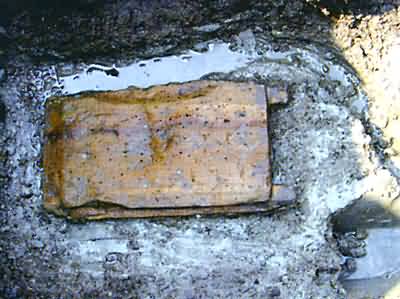
The Fujiashan site was wood-based, facing east and with Fujia
Mountain to its west. It's more than 30 meters wide and 16 meters
deep. Wares have been found that were constructed using slots and
pairs of tenons -- the first time these have been found in the
Hemudu Culture.
Archeologists said the inhabitants built houses and settled down
as their lifestyle shifted from hunting animals to planting
vegetables, raising livestock and making handicrafts.
They found many fragments of charcoal, connected with the marks
made by fire on the top and surface of crossbeams, suggesting that
it may have been fire that destroyed the village eventually.
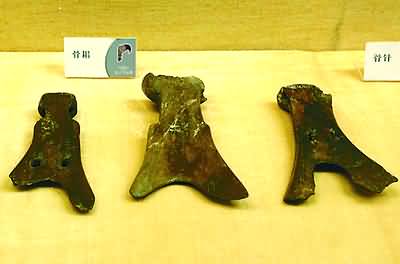
Wu Xiangdong, the head of the institute, said they had unearthed
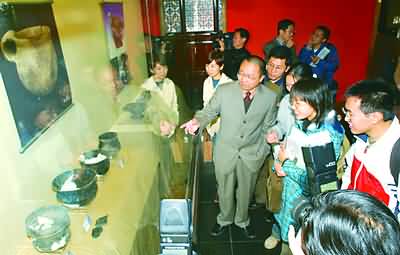
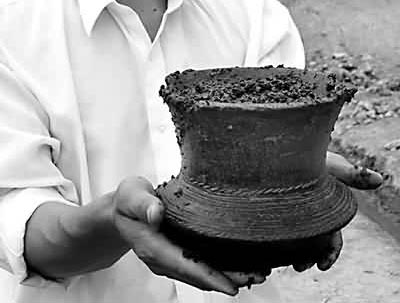
a large number of relics. The most numerous were earthenware --
recoverable items totaled more than 470 -- and some were first
examples in Hemudu Culture, as were the patterns engraved onto
them.
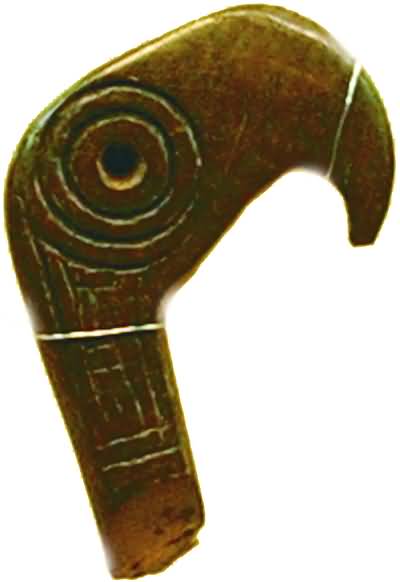
Among the relics, the most delicate and vivid was an
eagle-head-shaped piece of ivory, chiseled on both front and back.
The eagle's beak is hook-shaped and its eyes wide open, giving it a
fierce and powerful countenance.
Another eagle-shaped earthenware item was also recovered, in the
form of a bird spreading its wings, and was another first-time
discovery for this period. Archeologists conjectured that it may
have been used in sacrifices.
Another interesting find was a pot full of cooked water
chestnuts. Archaeologists speculated that it might have been
abandoned after a sudden disaster, such as a flood, fire, or an
attack from wild animals or enemies.
(China.org.cn by Chen Lin, January 25, 2005)