Simao City in southwest China's Yunnan Province, also known as the cradle of
the renowned Pu'er tea, will reclaim its ancient name of Pu'er in
April. Vice mayor of the city, Guan Dinglu, said that the plan has
been approved by the State Council, local newspapers reported on
February 27.
Pu'er tea, together with dianhong (Yunnan black
tea)?and tuocha (bowl-shaped compressed mass of tea
leaves produced in Sichuan or Yunnan), are the three best-known
teas in the province, where tea planting and making has been a
major industry for the rural people for thousands of years.
Although the three names might not be as well-known in China as
longjing (green tea produced in Hangzhou of Zhejiang) and oolong, dianhong used
to be a best-seller in Western Europe and the US in the 1970s and
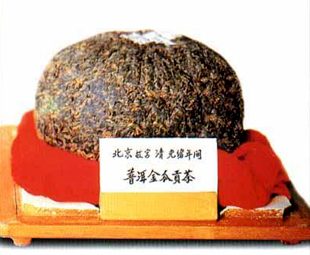
80s, while Pu'er was a favorite among royalty during the Ming
(1368-1644) and Qing (1644-1911) dynasties.
Pu'er has a distinctive flavor, which is somewhat earthy without
being repulsive, its richness lingering in the mouth and palate.
Poor grade Pu'er can be bitter but the top grades are smooth,
pleasant and sweet. The tea is also highly regarded for its
medicinal qualities as a digestive and nerve stimulant.
The tea takes its name from a Qing Dynasty prefecture that was
called Pu'er, where there stood the mountain, Pu'er Mountain. There
were many tea plantations on this mountain. After several name
changes over the last few decades, the current one, Simao City, was
finally decided upon and approved by the State Council on October
30, 2003.
Authorities reason that because of the city's rich history and
tradition in tea-making, reclaiming its ancient name of Pu'er will
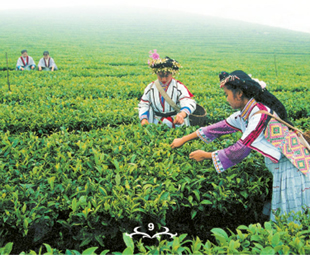
further promote the development of the local industry. About half
of the local residents are engaged in the tea business.
According to an official from the municipal?Party
committee's publicity department, the new name would be announced
at the Eighth China Pu'er Tea Festival, to be held in the city in
April.
Last year, the city reported sales revenues from Pu'er tea of
more than 800 million yuan (US$103.3 million). The city government
will invest 1 billion yuan (US$129 million)?in a series of
programs to promote tea culture and the tea industry, with plans
for a tea museum, a new road to be called Tea-Horse Road, a replica
of an ancient tea town, a Star Boulevard catering to tea
businesses, cultural events to promote tea-related art, and
commemorative activities to honor tea-making pioneers. According to
the city's social and economic development plan for the 2006-10
period, tea plantation acreage will be increased to 144,000
hectares, with tea-leaf output targeted to reach 81,000 tons, of
which 46,000 tons will be Pu'er tea.
(China.org.cn by Zhang Yunxing, March 1, 2007)