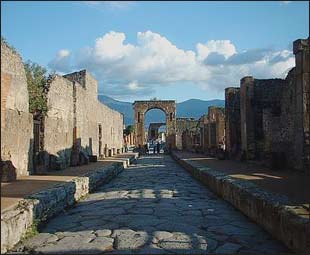
Pompeii, the Roman city destroyed in the 1st century AD during a
volcanic eruption, yesterday displayed how striking the power of
tragedy can be.
All those present held their breath as Italian archaeologist
Giovanni Girella knelt to lift a plaster cast of a child out of a
wooden box before holding it in his arms.
The relic, among others, arrived in Beijing yesterday for the
first exhibition of its kind in the Chinese capital.
The 6-year-old child had been buried beneath meters of volcanic
ash with his brother and parents in his family house for 1,800
years. He was uncovered in the 19th century during the excavation
that has been ongoing since the city's accidental discovery in
1748.
Casts were made of the family of four by filling the cavities in
the ashes with liquid chalk, as were 2,000 more of the 20,000
victims from the eruption of Mount Vesuvius on August 24, 79
AD.
Now, they will be displayed along with another family of eight
and a dog, and more than 480 pieces of artwork at the Millennium
Art Museum of the China Millennium Monument.?
The exhibition, The End of Pompeii: Stories from a Volcano
Eruption, will be open from February 15 to May 7, and "provide an
extraordinarily detailed insight into the life of a city at the
height of the Roman Empire," said Wang Limei, curator of the
museum.
It is also "the first time that relics from Pompeii will be seen
in China," said Stefania Giudice, fresco conservationist with the
Naples National Archaeological Museum, who accompanied the first
batch of the relics.
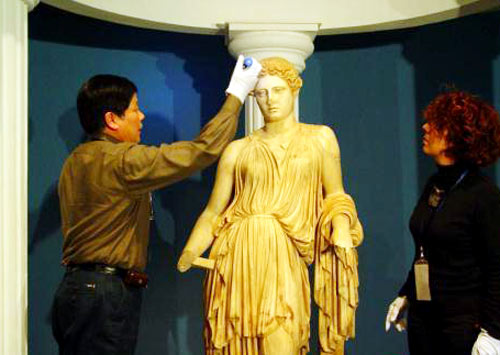
The Pompeian art on display is on loan from the Naples museum
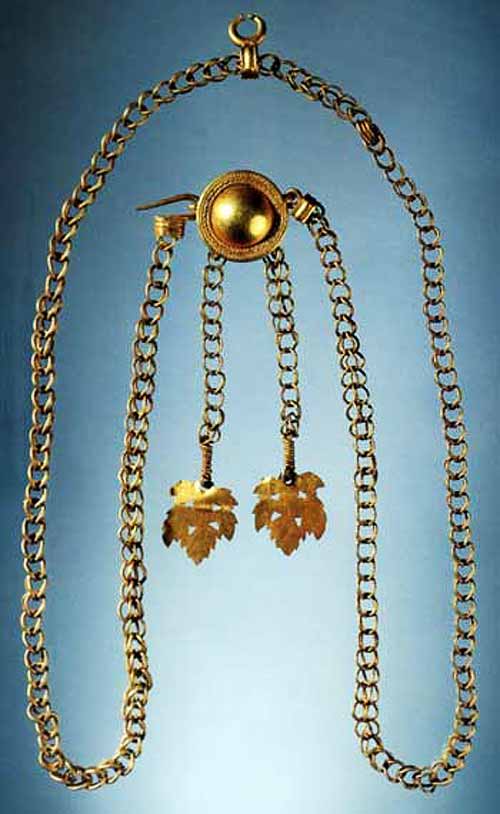
and the Pompeii Archaeological Administration in Italy. It includes
Roman sculptures, jewels, and well-preserved frescos.
The frescos, which shed light on everyday life in Pompeii, have
been hailed as a major advance in art history with the innovation
of the Pompeian Styles, featuring luxury and eroticism.
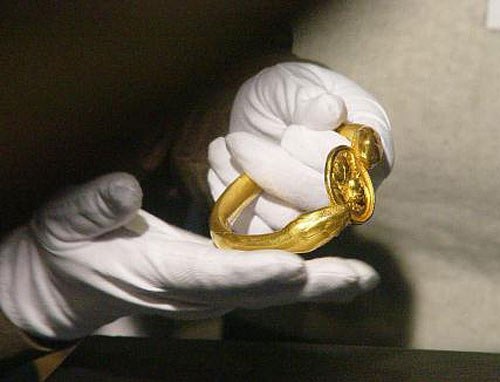
One example is a 610-gram gold bracelet, which used to be worn
on the upper arm of the child's mother. Snake shaped, it has at the
mouth a gold plate delicately carved with the image of Selene, the
Roman Goddess of the Moon, and is embedded with seven jewels
symbolizing stars above her head.
(China Daily February 7, 2007)